
Executive Summary
In the high-volume ecosystem of Amazon FBA, packaging is frequently misidentified as a static operational cost. However, sophisticated brands recognize that packaging is a dynamic lever for profit optimization. This case study analyzes how a strategic transition from generic stock packaging to a custom-engineered solution enabled a Home Goods brand to reduce breakage rates by 96% while simultaneously lowering per-unit logistics fees. The data demonstrates that precise structural engineering does not merely protect the product; it protects the Profit & Loss statement.
Introduction: The Hidden Cost of “Standard” Packaging
In the competitive landscape of e-commerce, many emerging brands view the shipping box simply as a container, prioritizing the lowest manufacturing price above all else. However, this approach often ignores the complex reality of logistics costs. The subject of this case study is a mid-sized Home Goods brand specializing in ceramic drinkware. Despite strong sales velocity during the Q4 season, their net profit was stagnating.
They faced a critical erosion of margins driven by two factors: a catastrophic 5% breakage rate and excessive FBA fulfillment fees. The brand approached CNN Box with a mandate to reduce costs. Their initial assumption was that they needed a cheaper box to offset their losses. Our engineering team countered with a more nuanced objective. We proposed that the “cheapest” box was actually the most expensive component of their supply chain.
By transitioning from a generic stock box to a custom-engineered solution, we enabled this client to dramatically improve their unit economics. This case study analyzes the engineering logic behind that transformation, demonstrating how precise structural design protects not just the product, but the brand’s financial health.
Part 1: The High Price of False Economy
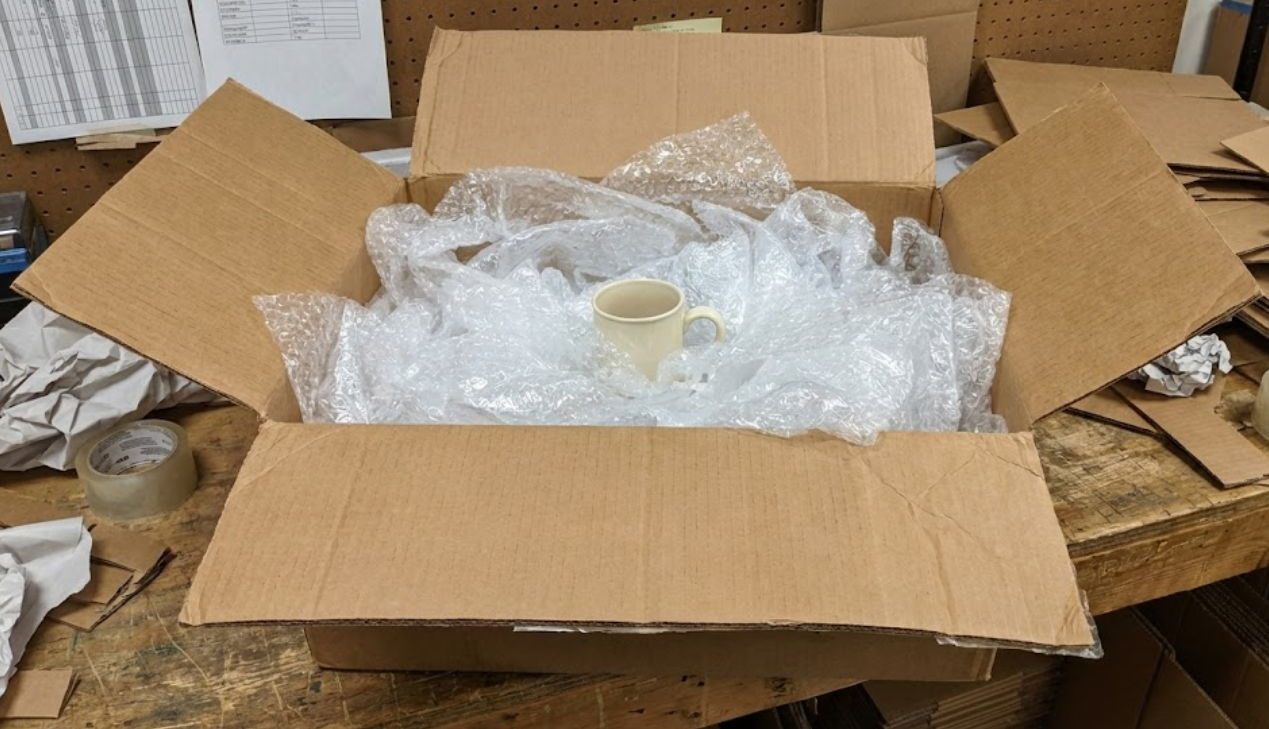
For many brands, the procurement strategy is driven by a single metric: Unit Cost. The client’s original packaging strategy was typical of this mindset. They utilized a standard, stock cardboard box purchased from a local distributor. It was a generic “B-flute” box, filled with layers of bubble wrap to protect the fragile ceramic inside. On paper, this strategy seemed prudent.
However, by auditing their supply chain, we identified that this “cheap” packaging was actually creating a massive financial leak through what we call the “Air Tax.” To accommodate the bulky layers of bubble wrap required for protection, the client was forced to utilize a box that was 40% larger than the product itself. In the world of logistics, volume is money.
The client was effectively paying premium shipping rates to move air and plastic across the ocean and into Amazon warehouses. Furthermore, the reliance on manual bubble wrapping introduced a critical variable of human error. If a packer wrapped the item too tightly or too loosely, the protection failed. This inconsistency led to a 5% return rate, triggering Amazon’s listing suppression algorithms and damaging the brand’s organic ranking.
Part 2: Material Science & Structural Design

The solution required a fundamental shift in philosophy: moving from “cushioning” (wrapping the product) to “suspension” (locking the product in space). We began by re-evaluating the material science. The industry standard “B-flute” is often chosen for its bulk, but bulk does not equate to strength. B-flute fibers are often loosely packed, making them susceptible to crushing under weight.
For this project, CNN Box engineers switched to High-Density E-Flute Corrugated Board. Although physically thinner than the previous material, our E-flute boasts a significantly higher ECT (Edge Crush Test) rating. By increasing the fiber density, we created a rigid structural shell that deflects impact energy rather than absorbing it.
To address the internal protection, we eliminated the bubble wrap entirely. Instead, we designed a custom die-cut insert. This paperboard chassis suspends the mug in the center of the box, creating a precise 15mm “crumple zone” of air between the ceramic and the outer wall. In the event of a drop, the insert deforms systematically to absorb the shock, keeping the product safe.
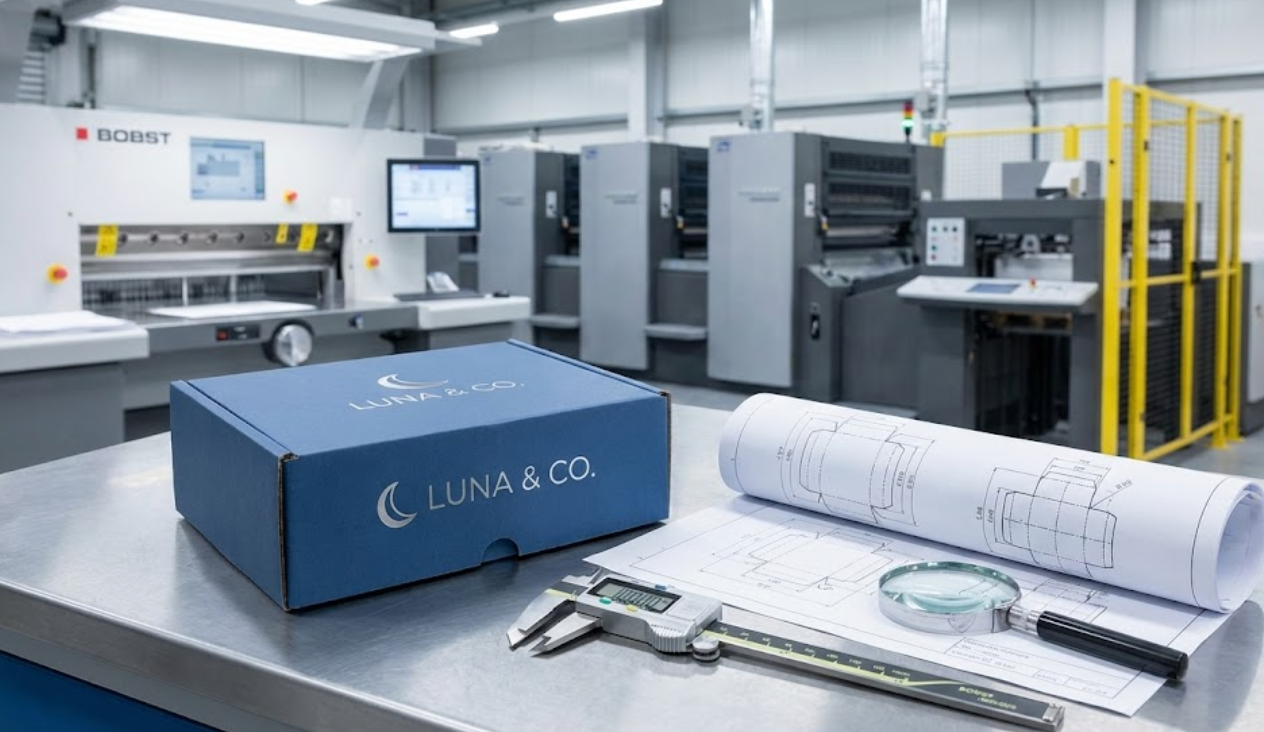
Finally, the precision of this engineering allowed for tighter tolerances. Using our BOBST VISIONCUT 1.6 machinery, we achieved folding precision within $\pm 0.1$mm. This ensured the box squared up perfectly during assembly, providing maximum structural integrity while reducing the total package volume to its absolute minimum.
Part 3: A Multi-Layered Profit Strategy

The most pervasive misconception in packaging procurement is viewing the “Unit Price” in isolation. Many brands simply look at the manufacturing cost and assume a cheaper box equals higher profit. However, when CNN Box engineers intervened, we did not merely adjust the box price; we fundamentally restructured the client’s Unit Economics (UE) across their entire supply chain.
We began by attacking the “FBA Tier Arbitrage.” Amazon’s fee structure is a rigid algorithm based on volume, not just weight. The client’s original packaging, swollen with unnecessary layers of bubble wrap, forced their lightweight mug into the expensive “Large Standard Size” tier. This meant they were paying premium logistics rates effectively to ship air and plastic.
By engineering a custom die-cut insert that suspended the product without bulk, we reduced the total package volume by 58%. This seemingly minor structural change dropped the product into the “Small Standard Size” tier. The impact was immediate: a hard-cost reduction of $0.80 per unit in fulfillment fees. For a brand shipping 60,000 units annually, this single design modification unlocked $48,000 in pure net profit.
Beyond immediate fulfillment, this volume reduction created a massive ripple effect through Storage and Freight efficiencies. In the high-stakes environment of Q4, Amazon’s monthly storage fees triple. Because the new CNN Box was significantly more compact, the client could store twice as many units in the same cubic footage, effectively halving their storage bill during peak season.
Furthermore, this efficiency extended upstream to ocean freight. The increased density allowed for 40% more units to fit into a standard shipping container, reducing the landed sea freight cost by an additional $0.12 per unit. When combined, the total logistics savings approached $0.92 per unit—completely dwarfing the nominal $0.15 increase in manufacturing costs.
Part 4: Turning Packaging into a Marketing Channel

While the financial metrics provided the hard data to justify the investment, the intangible benefits of the new packaging created a competitive moat around the brand. CNN Box transformed what was once a disposable “utility vessel” into a powerful “brand ambassador,” leveraging consumer psychology to drive growth.
We started by redefining the “Gift-Ready” value proposition. In the Home Goods category, the unboxing experience is a critical conversion driver. The previous generic brown box required customers to re-package the item if they wanted to gift it, which felt industrial and cheap. By utilizing our Heidelberg Offset Printing to apply the brand’s signature Pantone colors and a soft-touch Matte Lamination, we integrated the packaging into the product itself.
The ROI was clearly visible in the review section. During the holiday rush, customers explicitly praised the “gorgeous” box that required no wrapping. This allowed the client to maintain their premium $25 price point while competitors were forced to discount. The packaging justified the price, protecting the brand’s margin.
Simultaneously, we addressed the modern consumer’s demand for sustainability through a “Zero-Plastic” pivot. The old packaging forced customers to dispose of huge wads of non-recyclable bubble wrap, creating “Unboxing Guilt.” Our engineered E-flute insert is 100% paper-based and curbside recyclable, allowing the client to market their product as “Plastic-Free,” which resonated deeply with their eco-conscious demographic.
Finally, we engineered the box to eliminate “Buyer’s Remorse” through Psychological Anchoring. There is a moment of truth when a customer first holds a package. If it rattles, they assume it is cheap. The rigid material and precise locking mechanism of the CNN Box eliminated the “rattle” of loose packing. When a customer holds a dense, silent, and premium-feeling box, they subconsciously assign higher value to the product inside, significantly reducing returns based on perceived quality.
Conclusion: Packaging as an Asset Class
This case study illustrates a critical reality of modern manufacturing and retail: Cheap packaging is effectively the most expensive component of your supply chain. It incurs costs through breakage, inefficient logistics fees, and brand erosion.
At CNN Box, we define our role not as suppliers, but as Packaging Engineers. By leveraging advanced material science, precision manufacturing (via BOBST and Heidelberg technologies), and a deep understanding of logistics algorithms, we transform packaging from a cost center into a profit generator.
For brands operating at scale, the question is not “How much does the box cost?” but rather “How much is the current box costing you?”
Strategic Recommendation
We advise all FBA sellers to conduct a semi-annual “Packaging Audit.” If your product is currently relying on void fill (peanuts, bubble wrap) or standard stock boxes, there is a high probability of significant margin leakage. Contact the CNN Box engineering team to analyze your current dimensional weight efficiency and structural integrity.


