
Every year, businesses lose millions of dollars to damaged shipments. The problem isn’t fragile products. Their corrugated boxes simply can’t handle the stacking pressure during transit and storage.
The Edge Crush Test (ECT) measures how much vertical pressure your corrugated box can take before it fails. This is the industry standard. ECT ratings matter for all of you. They protect your products and help you avoid wasting money on excess packaging.
This guide breaks down the science behind ECT testing. You’ll learn the formulas that connect edge crush values to real-world stacking performance. Plus, you get practical tools to pick the right ECT rating for your specific loads. This could cut your packaging costs by 15-30%. Product damage rates drop too.
What is Edge Crush Test (ECT)
The Edge Crush Test measures how much force corrugated board can take from the edges. We measure this in pounds per lineal inch (lbs/in). Labs apply force straight to the board’s edges until it collapses. This mimics the pressure boxes get from stacking in warehouses and shipping containers.
The ECT value tells you how well boxes will stack. A 32 ECT rating means each linear inch of the board edge can resist 32 pounds of force before it buckles. A 55 ECT board holds up to 55 pounds per inch. Higher ECT numbers let you stack corrugated boxes higher. They also let you use lighter materials without losing strength.
Industry Standards Governing ECT Testing
Four major standards keep testing consistent across global chains:
ASTM D7030 sets the US lab testing rules. Labs use strict steps for preparing samples and applying force.
ISO 3037 gives the global standard for edge crush testing. You need clean, straight sample edges. The testing area must have controlled conditions.
TAPPI T-811 offers another testing method. North American packaging plants use this one often.
DIN EN ISO 3037 is the European guide. It aligns requirements across EU member states.
How ECT Testing Works: Procedure and Measurement
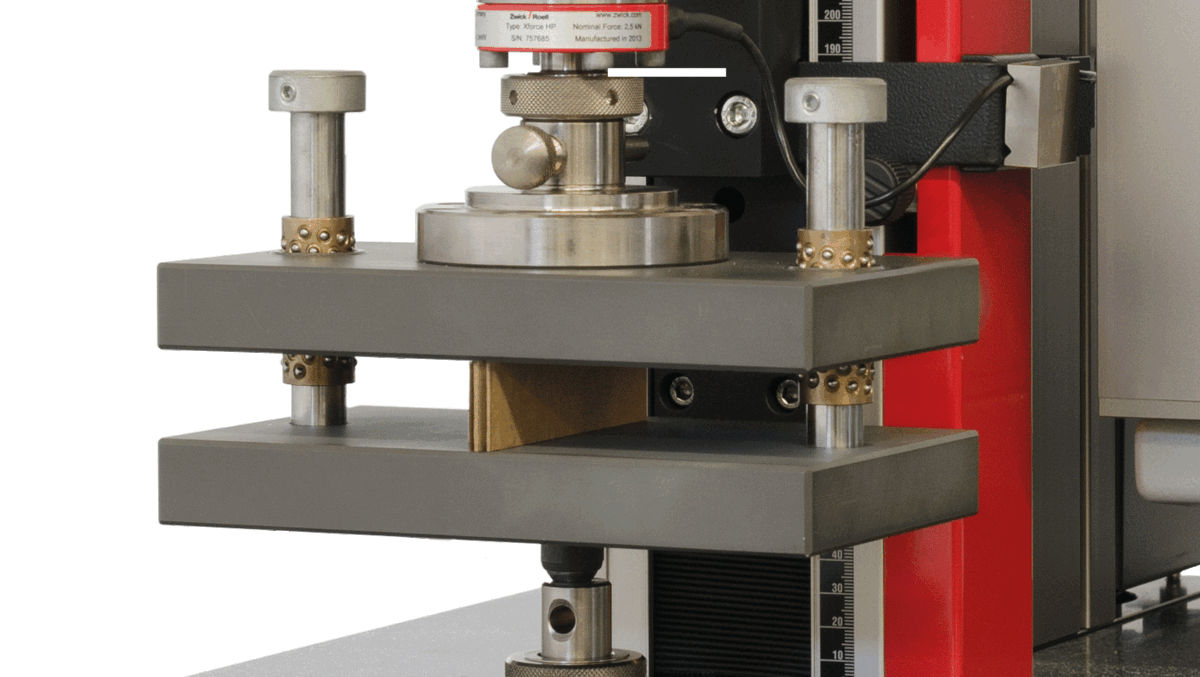
Sample Preparation Requirements
Cut test specimens to precise dimensions: 2 inches wide × board caliper height. Cutting direction matters. Always cut samples parallel to the corrugated flutes (vertical channels in the board). Cross-direction samples give false readings. These can be up to 40% lower than actual performance.
Condition samples at 73°F ± 4°F and 50% ± 2% relative humidity for minimum 24 hours before testing. Temperature and moisture affect fiber strength. A sample tested at 80°F and 70% humidity can show ECT values 15-20% lower than conditioned specimens.
Inspect edges under magnification. Dull cutting blades create ragged or crushed edges. These edges form stress points. They cause early failure during compression. Replace cutting blades every 500 samples. This keeps cuts clean and perpendicular.
The Testing Sequence

Step 1: Load the specimen into the edge crush tester machine. Place it between parallel compression platens. The corrugated edge faces downward. Align the sample centerline with the platen centerline. This prevents uneven loading.
Step 2: Add compressive force at a controlled rate of 0.5 inches per minute (per TAPPI T811 standard). The machine increases pressure until the flutes collapse. Digital sensors record force measurements 100 times per second.
Step 3: Capture peak load at the exact moment of failure. Modern testers identify the maximum force point before resistance drops. This peak value divided by the sample width (2 inches) equals your ECT rating in pounds per inch.
Step 4: Test 10 specimens minimum from each production batch. Calculate the average ECT value. Discard outliers that fall beyond ±15% of the mean. You need at least 8 valid readings for ASTM D7030 compliance.
Critical Measurement Parameters
Platen parallelism must stay within 0.001 inches across the full width. Misaligned platens create angular loading. This reduces measured ECT by 8-12%. Calibrate platen alignment each week using precision gauge blocks.
Loading rate consistency affects results. Tests run at 1.0 inches/minute show 5-7% higher ECT values than the standard 0.5 inch/minute rate. Faster compression doesn’t allow fiber stress to relax. Verify machine speed calibration each month.
Environmental controls prevent moisture interference. Testing rooms need constant monitoring. A 10% humidity increase drops ECT readings by 6-8 pounds per inch for standard kraft liners. Install hygrometers that log conditions during the testing period.
Automated edge crush testers store full force-displacement curves. These graphs show how the board resists compression before failure. Boards with gradual curves show ductile failure. Sharp drops show brittle collapse. This comes from poor fiber bonding or moisture damage.
ECT Rating Selection Guide: Match Your Packaging to Load Requirements

Pick the wrong ECT rating and you lose money two ways: damaged products from weak packaging boxes or wasted materials from overbuilt packaging. You need three inputs: product weight, stacking height during storage and transit, and environmental conditions.
Standard ECT Ratings and Their Load Capacities
Compare strength against cost side-by-side. It simplifies the decision. We detailed the standard ratings in this table. You can easily find the “sweet spot” for your specific load.
| ECT Rating | Load Capacity | Cost Impact (vs. 32 ECT) | Best Applications |
|---|---|---|---|
| 23 ECT | Up to 20 lbs | Save 20-30% | Inner packaging, dividers, void fill. Also for light items. Stack max 2 layers high. |
| 26 ECT | 20 – 35 lbs | Save 10-15% | Low-density goods like pillows or clothes. You get basic puncture protection. Just keep stacking limited. |
| 32 ECT (Industry Standard) |
Up to 65 lbs | Baseline (0%) | General freight and direct shipping. Meets the minimum UPS/FedEx rules for standard packs. |
| 44 ECT | 65 – 95 lbs | +20-40% | Heavy pallet loads and auto parts. Great for bulk bins you store for a long time. |
| 48 ECT (Double-Wall) |
95 – 120 lbs | +40-60% | Fragile electronics, heavy machinery parts. Gives you impact resistance plus high stacking strength. |
| 60-90 ECT (Triple-Wall) |
120 – 200+ lbs | +60-100% | Industrial gear, export containers, and bulk bins. Stops damage on heavy shipments. |
Need a precise calculation? The table above provides general rules of thumb. To calculate the exact ECT rating for your custom box dimensions and stack height, skip ahead to our Complete McKee Formula Guide.
Cost Analysis: Finding the Economic Sweet Spot
A company shipping 10,000 boxes yearly faces different total costs based on ECT selection. Material costs $5 per box. Each damage claim averages $50 in replacement product, labor, and customer service.
Underpackaging scenario: Using 26 ECT for 50-pound loads reduces material costs to $4 per box ($40,000 total). But damage rates climb to 5-10%. At 7.5% failure rate, claims cost $37,500. Total cost per year: $77,500. The material savings disappears into damage expenses.
Best packaging: 32 ECT matched to load needs costs $50,000 in materials. Damage rate drops below 1% ($2,500 in claims). Total cost per year: $52,500. This baseline delivers the best balance.
Strategic recommendation: Match ECT to calculated needs. Upgrade one rating level for high-value products where claim costs exceed the 20-40% material premium.
The Complete McKee Guide: Calculating the Right ECT
Stop guessing if a packaging box will break. In 1963, engineers McKee, Gander, and Wachuta gave the packaging world a blueprint. It predicts box strength. The math looks scary, but it’s simple. It connects box geometry (size/thickness) with raw board strength (ECT).
We blended theory and practice for you below. Use this guide to find the specific ECT rating your load needs.
The Core Formula
The McKee Formula determines corrugated box compression (BCT) using edge strength (ECT). Want the right packaging? We work backward from your load weight.
📐 The McKee Equation
BCT = 5.87 × ECT × √(Thickness × Perimeter)
- BCT (Box Compression Test): Total weight the box supports (in lbs).
- ECT (Edge Crush Test): Raw strength of the board (lbs/inch).
- Thickness: Board caliper. C-flute sits around 0.19″.
- Perimeter: Total length of box walls (2 × Length + 2 × Width).
- 5.87: Standard multiplier for C-flute boxes. Profiles vary a bit.
Step-by-Step Calculation Guide

Let’s test a real scenario. Say you ship a 50 lb product in a standard 16″×12″×10″ shipping box. Warehouse crews stack them 10 feet high.
Step 1: Determine the “Dead Load”
Find the weight sitting on the bottom box.
Stack Height: 10 feet ≈ 12 boxes high.
Weight on bottom box: (12 total boxes – 1 bottom box) × 50 lbs = 550 lbs.
Step 2: Apply the Safety Factor (SF)
Labs have perfect conditions. Warehouses don’t. Multiply the dead load by a “Safety Factor.” This covers humidity, pallets, and bumps.
Typical Safety Factors:
• 3.0 = Short-term, climate-controlled storage.
• 4.5 = General supply chain (Average conditions).
• 5.0+ = High humidity or long-term storage.
Calculation: 550 lbs (Load) × 4.5 (SF) = 2,475 lbs.
This is your Target BCT. Engineer your corrugated box to hold 2,475 lbs. It stays safe that way.
Step 3: Solve for Minimum ECT
Now, flip the McKee formula. Find the ECT rating you need to buy.
Perimeter: 2 × (16 + 12) = 56 inches.
Equation: Target BCT ÷ (5.87 × √(Thickness × Perimeter))
Math: 2,475 ÷ (5.87 × √(0.19 × 56))
Math: 2,475 ÷ (5.87 × 3.26)
Math: 2,475 ÷ 19.14 = 129 ECT needed?
Wait, that number is huge! Why? We used a single-wall box calculation for a massive 2,500lb load. This implies a standard single-wall box (32-44 ECT) fails. Upgrade to Double-Wall (48-51 ECT) or Triple-Wall. They can handle this specific stack height and safety score.
The “Reality” Modifiers
Math gives you a start. But three factors hurt your corrugated box strength:
- Humidity: 80% relative humidity kills about 50% of box strength. Shipping to Florida in July? Push your Safety Factor to 5 or 6.
- Pallet Overhang: Boxes hanging off the pallet edge by 1 inch lose 32% of compression strength.
- Interlocking Stacks: Brick patterns reduce strength by 50%. Column stacking (corners aligned) creates stronger loads.
5 Critical Factors That Affect ECT Performance
You might have two paperboard boxes with identical ECT stamps, yet one survives the journey while the other crumples. Why the difference? It comes down to the gap between lab conditions and real-world chaos. Understanding how a corrugated box reacts to its environment and manufacturing history is just as important as the raw strength rating itself. Here is a breakdown of what actually degrades performance in the field.
Moisture Content: The Fiber Softener

Paper fibers are naturally hygroscopic—they love to absorb water. Think of your shipping box like a very slow sponge. As humidity in the warehouse rises, the box pulls moisture from the air, causing the rigid hydrogen bonds between fibers to relax. This doesn’t just make the box feel soft; it drastically cuts its ability to bear weight. A box that is perfectly strong in a dry factory can lose nearly half its stacking strength after a week in a humid shipping container, turning a sturdy stack into a leaning hazard.
Flute Profile Architecture
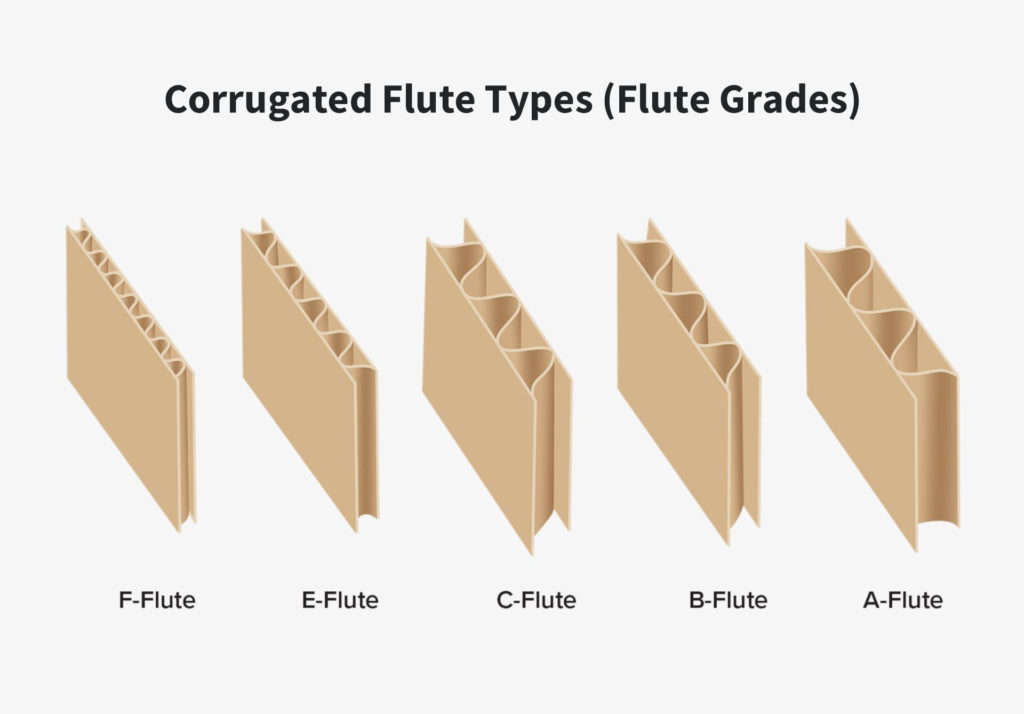
The “waviness” inside the wall isn’t just for cushioning; those flutes act like vertical columns in a building. The geometry matters immensely. Taller arches (like A-flute) offer great cushioning but can be unstable under heavy vertical loads, while tighter, shorter waves (like C-flute or E-flute) provide more vertical contact points per inch. Choosing the wrong profile for your corrugated box means those internal columns might buckle under pressure, even if the paper material itself is high quality.
Manufacturing Precision
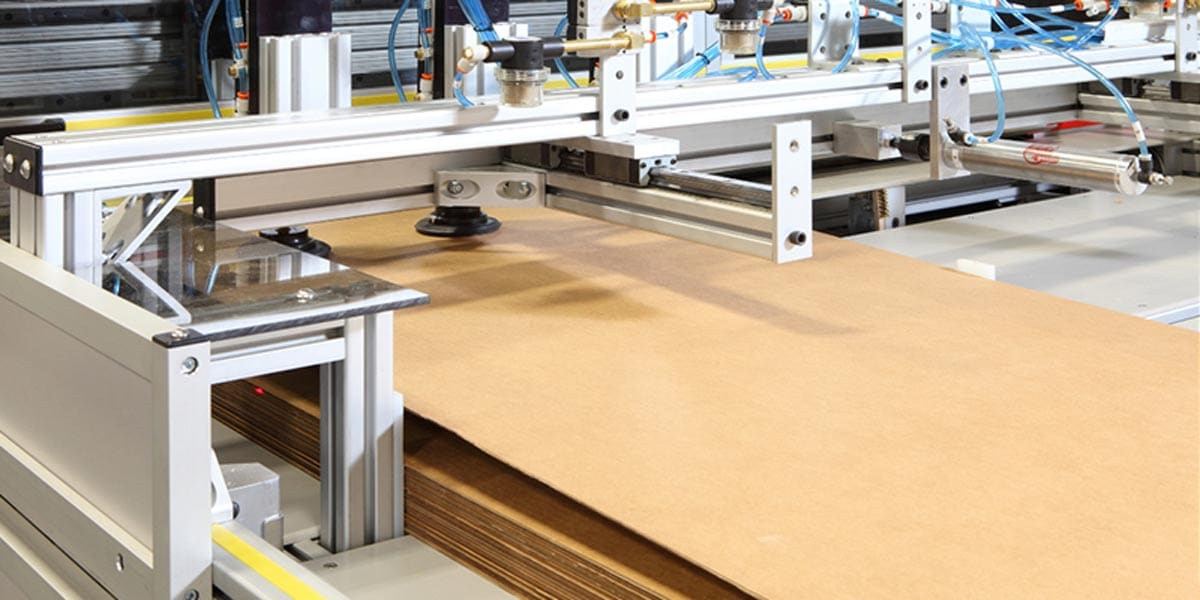
A corrugated box effectively functions as a sandwich structure. Its strength relies entirely on the bond between the liner (the bread) and the fluted medium (the filling). If the manufacturing line runs too fast or the glue coverage is spotty, you get “delamination”—where the liner peels away under stress. Furthermore, if the machine applies too much pressure during printing or die-cutting, it can crush the flutes before you even pack the box. A crushed flute is a broken column; it cannot support the weight it was rated for.
Time and Creep Fatigue
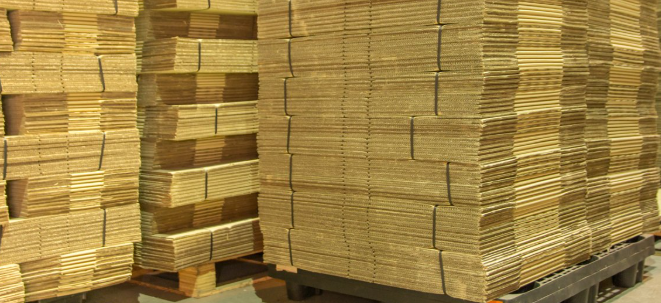
We often forget that cardboard gets “tired.” This phenomenon is called creep. When a paperboard box sits at the bottom of a stack for months, it is under constant storage stress. The fibers slowly deform and shorten over time, even if the weight on top never changes. A box that can easily hold 100 pounds for a day might collapse under that same 100 pounds after three months of storage basically because the material has fatigued.
Design Geometry and Cuts
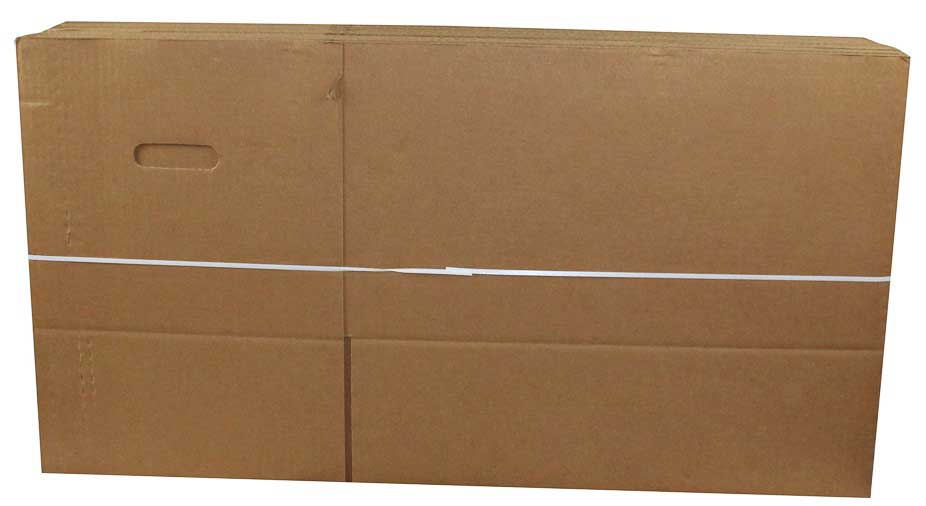
Design features are double-edged swords. While hand holes and ventilation slots make handling and cooling easier, they interrupt the vertical path of the load. Imagine cutting a hole in a load-bearing wall of a house—you have to reinforce it, or the roof sags. Every cut, score line, or perforation on a corrugated box creates a stress concentration point where buckling is most likely to start. If your design requires these features, you generally need a higher ECT rating to compensate for the structural continuity you removed.
3 Steps to Turn Data Into Better Design
Spec sheet numbers don’t guarantee savings. You need real strategy, not just math, to turn ratings into better packaging. We suggest a simple three-step path. Your goal? Balance product safety with your budget. Here is how you handle it without spreadsheet headaches. We even included action checklists for each stage.
Understand the Real Environment

Start with the corrugated box’s real life. Weight is just one piece of the puzzle. Map the full trip. Check your stacking height. Will pallets sit in a humid warehouse for months? Maybe they leave shelves in two weeks. Context changes the game.
Look at this real-world case. An electronics company built boxes for 90 days of rough storage. But their products shipped in just 14 days. So, they changed specs to match reality. This stopped them from paying for useless “insurance.” They swapped heavy-duty paperboard for standard. No units got damaged.
📝 Phase 1 Action Checklist:
Walk the floor: Get the real max stack height in your warehouse. Don’t guess.
Check the climate: Track humidity levels in your storage zone. Is it climate-controlled? Or do seasons affect it?
Define the duration: Find the average and max time a box sits before shipping.
Identify touchpoints: List every stress spot. Think LTL transfers, belts, or manual sorting.
Test and Optimize the Box

Got your requirements? Now test them. Formulas like McKee’s start you off, but they are just guesses. Get physical. Build prototypes. Crush them.
A theoretical “fail” often works fine. Why? The product inside might support the load. Conversely, a strong-looking box might fail. Bad hand-hole placement causes this. Get creative with materials. Don’t jump straight from standard 32 ECT to heavy 44 ECT. Ask your packaging supplier regarding intermediate grades. You might find a “sweet spot” like 38 ECT. You get the necessary strength. Plus, you skip the price hike of the next tier.
🔨 Phase 2 Action Checklist:
Run the math: Use the McKee formula to find your theoretical Minimum ECT.
Ask for “Performance Grades”: Get quotes for intermediate ECT ratings (like 29, 35, or 38 ECT). Don’t just stick to standard options.
The “Contents” Test: Load-test a prototype with the product inside. See if the item adds strength.
Inspect design features: Check your vents or hand-holes. Are they cut into load-bearing corners? That’s a huge mistake.
Run a Trial Shipment

Take the corrugated box out of the lab. Compression machines stay consistent. Supply chains don’t. Ship a pilot batch of 500 units before a full run. Watch how they perform. Get feedback from the warehouse floor. Check for leaning stacks. Look for crushed corners.
Real-world feedback beats simulation. But software still saves you trial-and-error time. Digital tools let you test tweaks on screen. Spot a weak vent hole before you cut a sample. Use data for smarter choices. Don’t just build harder boxes.
🚀 Phase 3 Action Checklist:
Tag the test batch: Put a bright sticker or special tape on pilot boxes. This makes them easy to track.
Get arrival photos: Ask your top 3 destinations for photos. You need to see the pallet condition upon arrival.
The “Bottom Box” Check: Check the bottom layer of a stack yourself after it sits for 14 days.
Log the damage: Compare the pilot batch damage against your usual average.
Conclusion
ECT requires a shift in mindset. You stop viewing packaging as just a commodity and start treating it like an engineering decision. The numbers—32 ECT vs. 44 ECT—might look small on a spreadsheet, but in your warehouse, they are the difference between a stable shipment and a costly insurance claim. You now have the formulas and the guides to make smarter choices. But knowing the math is one thing; applying it to thousands of boxes is another.
This is where CNN Box steps in.
You don’t need to be a McKee formula expert to get the perfect box. We handle the heavy lifting for you. At CNN Box, we don’t just sell standard cardboard; we engineer custom corrugated boxes tailored to your specific load, humidity, and transit needs. We look at your entire supply chain. Whether you need a cost-efficient 32 ECT for local delivery or a heavy-duty triple-wall solution for export, we ensure you pay for exactly the strength you need—nothing less, nothing more.
Ready to optimize your supply chain? Stop hoping your shipping boxes hold up. Let us prove it. Contact our engineering team today for a free audit, and let’s find the perfect strength profile for your next shipment.


